
Quick Facts
- Level
- Essential
- Category
- Waqf and Ibtida
- When it occurs
- It occurs after a stop, when a reciter begins again or starts a new segment of reading.
- Letters involved
- Context-dependent
Understand the rule
Ibtida is the start of a new recitation unit after a pause. The reader should continue with careful sound, proper articulation, and a clear understanding of where the new unit begins. It is not simply the act of starting from the next word; it is a practical decision that can affect how a reciter joins or restarts the sound. A learner should study it in the context of waqf and stop-signs, particularly when a stop changes how a phrase is continued.
When does it occur?
It occurs after a stop, when a reciter begins again or starts a new segment of reading.
Which letters are involved?
This topic is determined by context rather than a fixed letter set.
How is it pronounced?
The learner should begin with clear articulation and awareness of how the stop may affect the continuing sound at the new start.
Examples
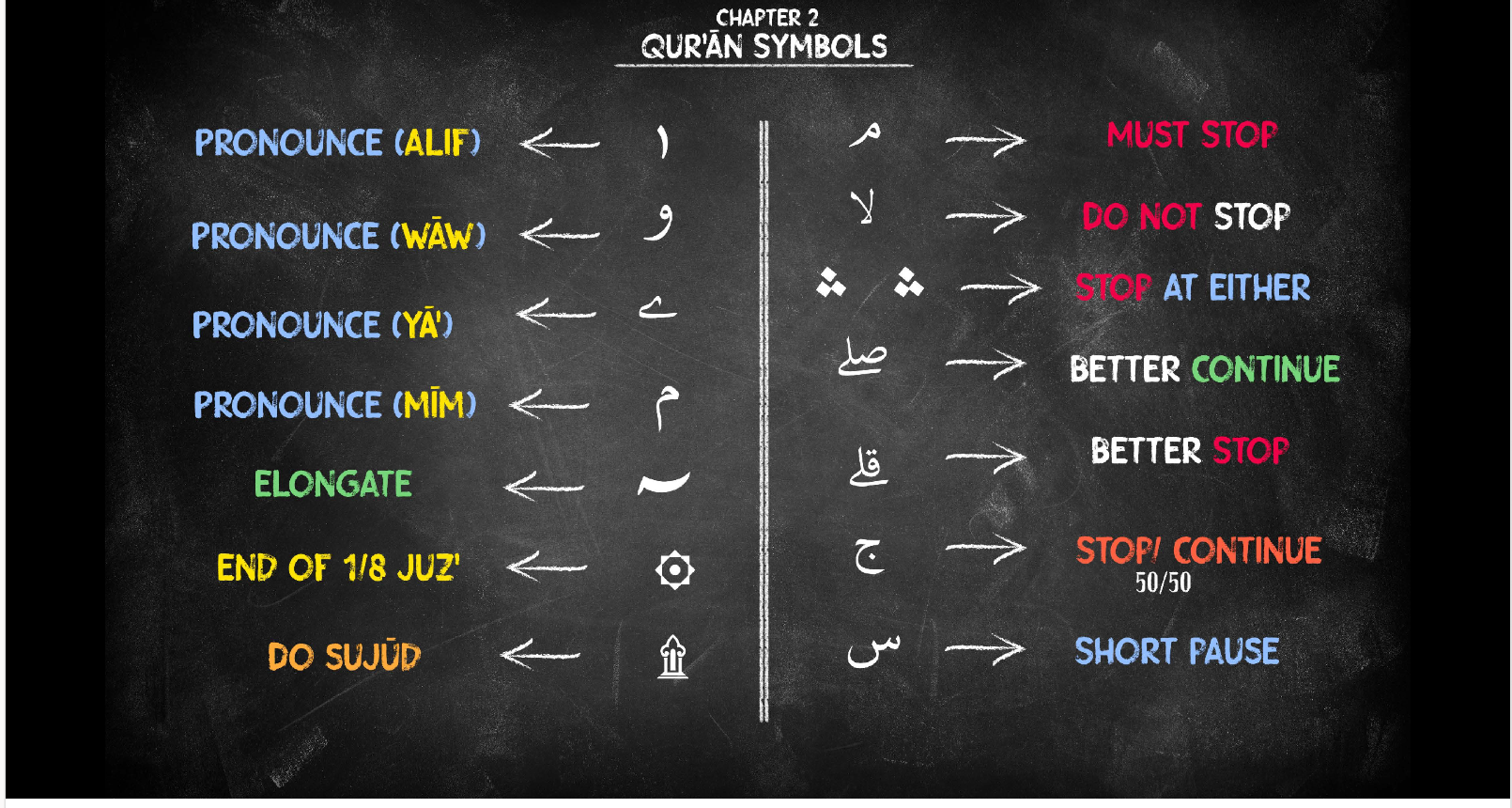
- Find the mark in your mushaf.
- Read the instruction beside the matching symbol.
- Protect the meaning before you stop or continue.
- Remember that editions can differ; your teacher and your own mushaf take priority.
The examples below are clearly labelled teaching examples and are not from the Quran. Use them to notice the rule, then confirm your recitation with a qualified teacher.
بِسْمِ bismi (in the name) — Not from the Quran
Common Mistakes
- Ignoring the context of a stop when resuming.
- Starting without paying attention to the new sound environment.
Connect this lesson
Waqf
Waqf means stopping the recitation briefly at the end of a word, phrase, or verse while observing the meaning and the ending sound.
Open lesson: WaqfMadd Tabii
Madd Tabii is the natural two-count lengthening of Alif, Waw, or Ya when the matching vowel comes before it and no hamzah or sukoon creates another Madd category.
Open lesson: Madd TabiiHamzat al-Wasl
Hamzat al-Wasl is the connecting Hamzah, represented in the Uthmani script by an alif with the waslah mark (ٱ), that is pronounced only when it begins the recitation or follows a stop, and is dropped when the word is joined to what precedes it.
Open lesson: Hamzat al-WaslRemember
A pause is not the end of the lesson; Ibtida is the beginning of the next careful step.
Practice
Try to identify the trigger first, say the sound slowly, then listen and repeat. Short, accurate practice is more useful than rushing through many examples.
- Why is starting after a stop a separate skill from the stop itself?
- How can context influence a restart?
Question 1 of 2
Which definition does this lesson give for Ibtida?
Frequently Asked Questions
If I stop in the middle of a recitation, do I need to restart with a new sound?
The sound should be restarted in a careful and context-aware way, not mechanically or without attention to the stop and the next segment.
Sources and review notes
What still needs review?
- This description is learner-friendly and should be reviewed with the stop-sign tradition before publication.
A reference records the source used for study; it does not mean the source author approved this lesson.
Important Note
Tajweed is best learned through both understanding and listening. Written explanations can help you understand the rules, but correct pronunciation, timing, and articulation are best learned by listening to a qualified reciter or teacher and practicing along with them.
For the best results, combine reading, listening, repetition, and guidance from a qualified Tajweed teacher.