
Quick Facts
- Level
- Intermediate
- Category
- Waqf and Ibtida
- When it occurs
- It applies at every chosen stop, when the final word is adjusted according to the stopping rules.
- Letters involved
- Context-dependent
What is When Stopping Affects Pronunciation?
When the reciter decides to stop, the word ending is treated differently than while continuing. The last letter generally takes sukoon. Final dammatayn and kasratayn lose their tanween when stopping, while fatḥatayn is generally read as an alif-lengthening at the stop (with recognised orthographic exceptions). The exact treatment of a final hamzah and other endings depends on the word and should be learned from demonstrated examples. Lengthenings also change: a natural madd at a word end followed by one letter may be lengthened under 'Arid li-Sukun. The learner should practise the same word twice, once continuing and once stopping, to hear what changes.
When does it occur?
It applies at every chosen stop, when the final word is adjusted according to the stopping rules.
Which letters are involved?
This topic is determined by context rather than a fixed letter set.
How is it pronounced?
Practise pairs: read the ending while continuing, then stop on the same word, and listen for the differences with a qualified teacher.
Examples
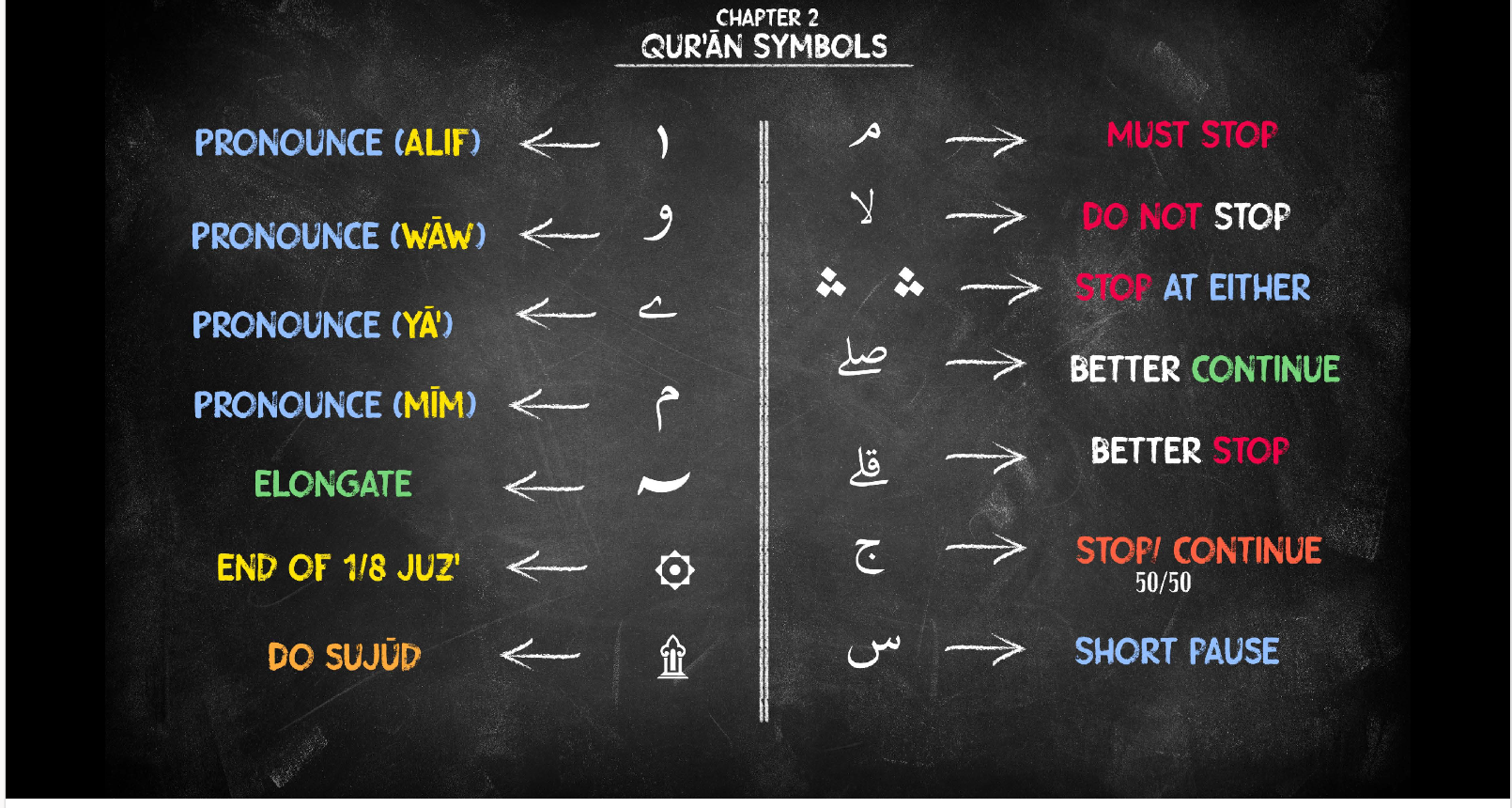
- Find the mark in your mushaf.
- Read the instruction beside the matching symbol.
- Protect the meaning before you stop or continue.
- Remember that editions can differ; your teacher and your own mushaf take priority.
The examples below are clearly labelled teaching examples and are not from the Quran. Use them to notice the rule, then confirm your recitation with a qualified teacher.
كِتَابٌ → كِتَابْ — kitābun → kitāb (a book when stopping) — Not from the Quran
Common Mistakes
- Pronouncing a full vowel on the final letter when stopping.
- Keeping the continuing-length madd when stopping changes it, or the reverse.
Important Differences
When Stopping Affects Pronunciation and Waqf
Study the condition, letters, and sound of When Stopping Affects Pronunciation alongside Waqf so the two patterns are not treated as interchangeable.
Compare WaqfWhen Stopping Affects Pronunciation and Madd 'Arid li-Sukun
Study the condition, letters, and sound of When Stopping Affects Pronunciation alongside Madd 'Arid li-Sukun so the two patterns are not treated as interchangeable.
Compare Madd 'Arid li-SukunWhen Stopping Affects Pronunciation and Mushaf Stopping Symbols
Study the condition, letters, and sound of When Stopping Affects Pronunciation alongside Mushaf Stopping Symbols so the two patterns are not treated as interchangeable.
Compare Mushaf Stopping SymbolsRemember
Stopping is not silence alone: the ending of the word is rebuilt by the stop.
Practice
Try to identify the trigger first, say the sound slowly, then listen and repeat. Short, accurate practice is more useful than rushing through many examples.
- What usually happens to the final letter when you stop?
- Which madd rule depends on whether you stop or continue?
Question 1 of 2
What is When Stopping Affects Pronunciation?
Frequently Asked Questions
Does stopping add a new sound?
Usually no. The final vowel is normally replaced by sukoon; tanween is removed, and fatḥatayn is commonly read as an alif-lengthening at the stop. Special endings should be learned from a qualified teacher.
Important Note
Tajweed is best learned through both understanding and listening. Written explanations can help you understand the rules, but correct pronunciation, timing, and articulation are best learned by listening to a qualified reciter or teacher and practicing along with them.
For the best results, combine reading, listening, repetition, and guidance from a qualified Tajweed teacher.